


Short answer
Smash only when the lob is short, in front of you and high enough to hit hard. Turn sideways, get under the ball, and hit it at the highest point you can reach with an extended arm, using your whole body. A flat smash goes to the feet or through the middle; a kick smash with topspin bounces high off the back glass and, played “por 3” or “por 4”, out of the court. On any other lob, the bandeja is the better choice.
This guide is part of our overview of all padel shot types.
When to smash, and when not to
Padel courts are enclosed, so a hard smash often comes back off the back glass. A smash that does not end the point gives your opponents an easy ball, and you are out of position. That is why good players smash less often than you might think, and choose the bandeja or the víbora on most lobs.
| The lob | Best choice |
|---|---|
| Short, in front of you, high enough to hit hard | Smash (flat or kick) |
| Mid-court, reachable in balance, not short | Víbora |
| Deep and high, pulls you back | Bandeja |
| Over your head, too deep | Let it bounce and play it off the back glass |
The four smashes
Flat smash
Hit hard and flat to the feet of your opponents or through the middle, so the ball does not come off the back glass with height. Your main finishing smash.
Kick smash (topspin)
Hit with topspin so the ball bounces hard and high off the back glass, towards the net. Used to force a weak reply or to set up por 3 and por 4.
Por 3
A kick smash that bounces and leaves the court over the side fence. Named after the 3-metre side.
Por 4
A kick smash that bounces and leaves the court over the back wall. Named after the 4-metre back wall. The hardest one.
The smashes explained by Prodigy Padel Academy


Technique, step by step
- Read the lob and turnTurn sideways as early as possible and move under the ball with side steps.
- LoadRacket high and well behind your head, with a full backswing, free arm pointing at the ball, weight on your back foot.
- Get under the ballPosition yourself so the ball will drop slightly in front of your hitting shoulder.
- Hit at the highest pointExtend your arm fully and meet the ball as high as you can reach. Late contact means less power and less control.
- Use your whole bodyPush from your legs, rotate your hips and shoulders, and let the arm follow. Finish with a snap of the wrist: power is built by the chain and released by the wrist.
- Finish and recoverLet the racket follow through to a full finish without braking, land balanced, and be ready: the ball may come back.
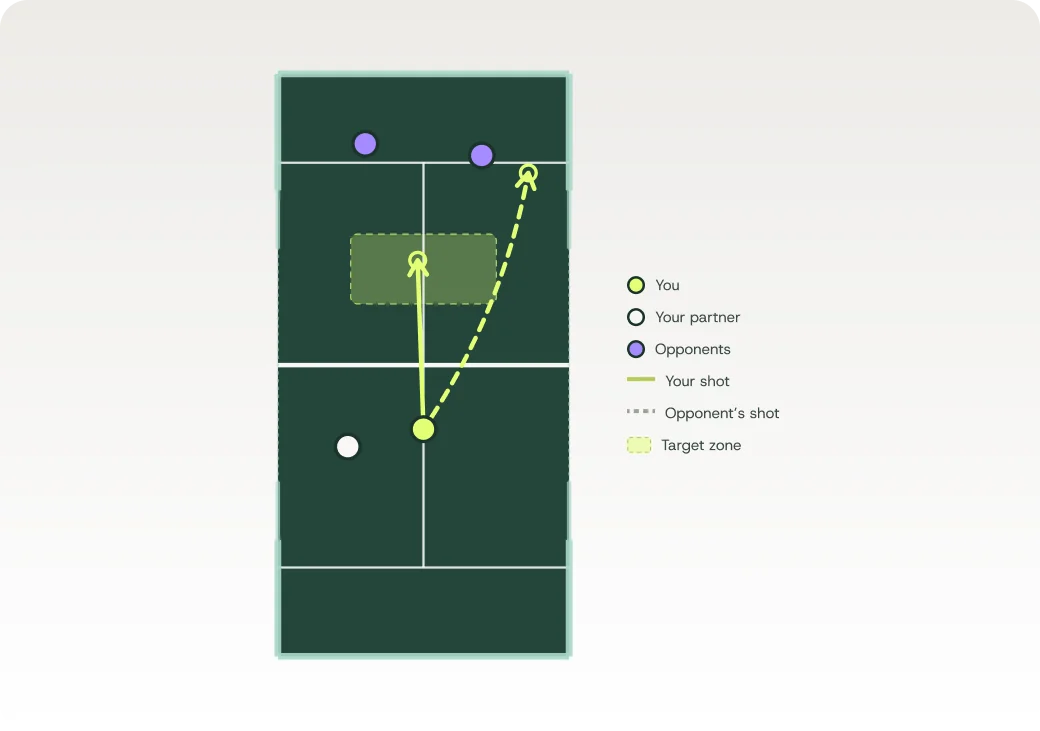
The most common mistakes
Smashing every lob
Most lobs are not smash balls. Choose the bandeja or víbora instead.
Letting the ball drop
Contact too low means the ball goes into the net or sits up. Hit it at the highest point.
Facing the net
Without the turn you only use your arm. Turn sideways first.
Smashing too deep, flat
A flat smash that lands deep comes back off the back glass. Aim lower and closer.
No recovery
Your opponents can return a smash off the glass. Stay ready and move back into position.
All arm, no legs
Power comes from the legs and rotation, not from swinging harder.
Avoid these mistakes (Prodigy Padel Academy)

How to measure your smash with Padelplay
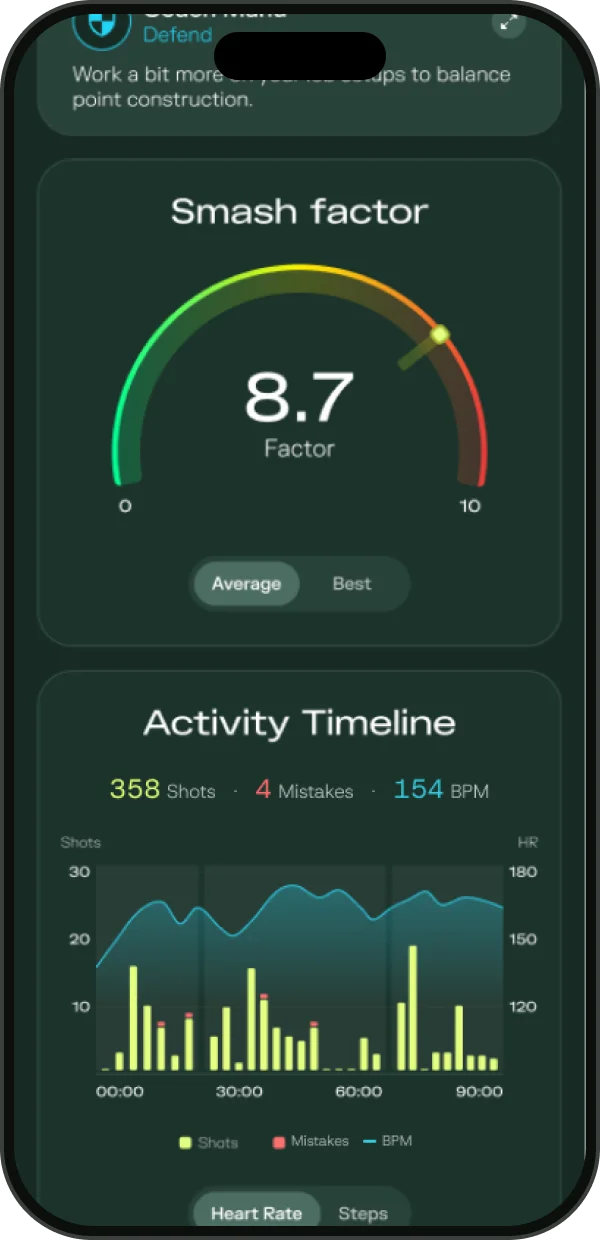
Padelplay recognises the smash as its own shot type and gives every smash a Smash Factor: one number for how well you hit it. Players whose smash feels powerful often score lower than they expect; the cause is usually technique, such as late contact or too little body rotation.
- Average and best. See your average and best Smash Factor per session and over time.
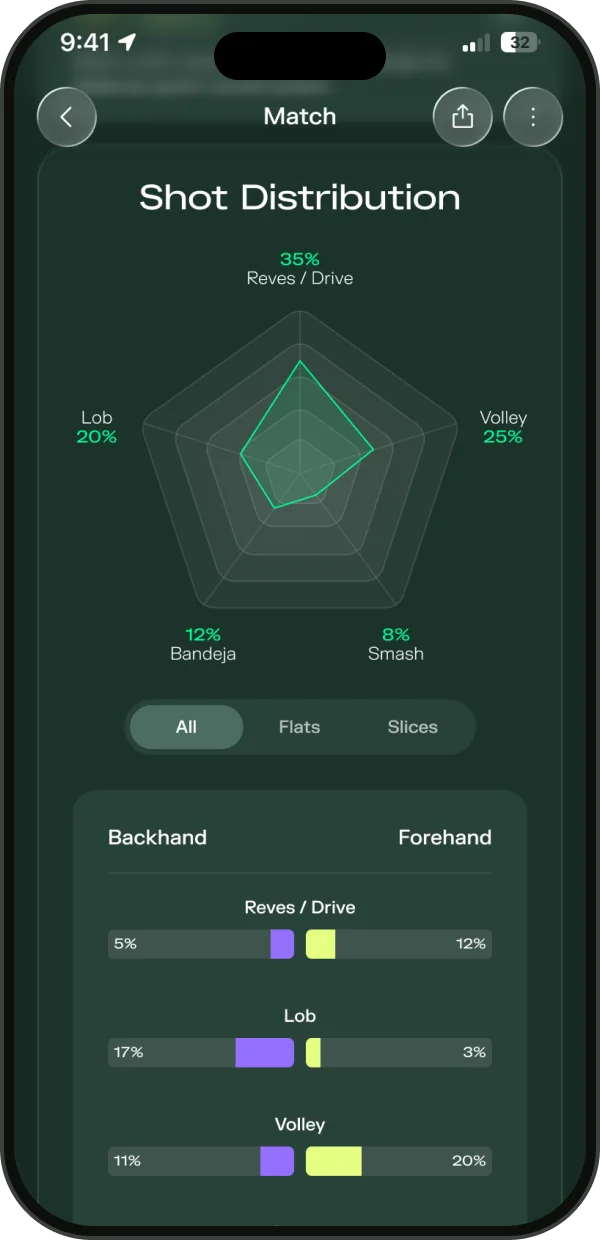
- How often you smash. Your shot distribution shows whether you smash too many lobs.
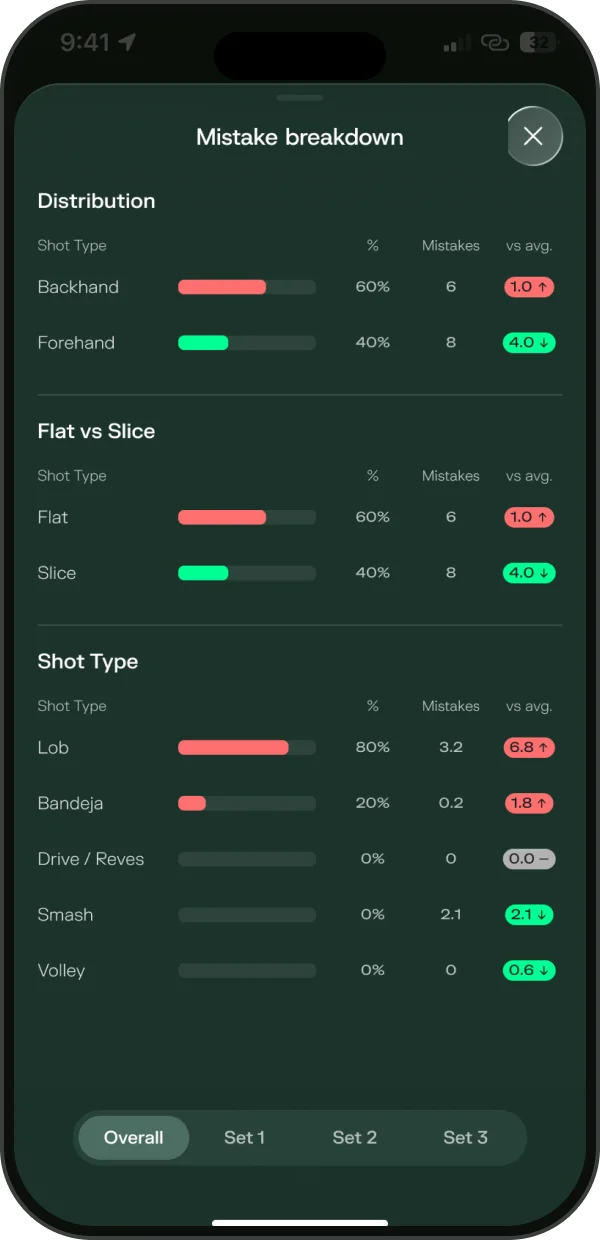
- Your mistakes on it. Tag a mistake with one tap and see your smash mistakes compared with your average.
Train your smash with Padelplay training mode (beta)
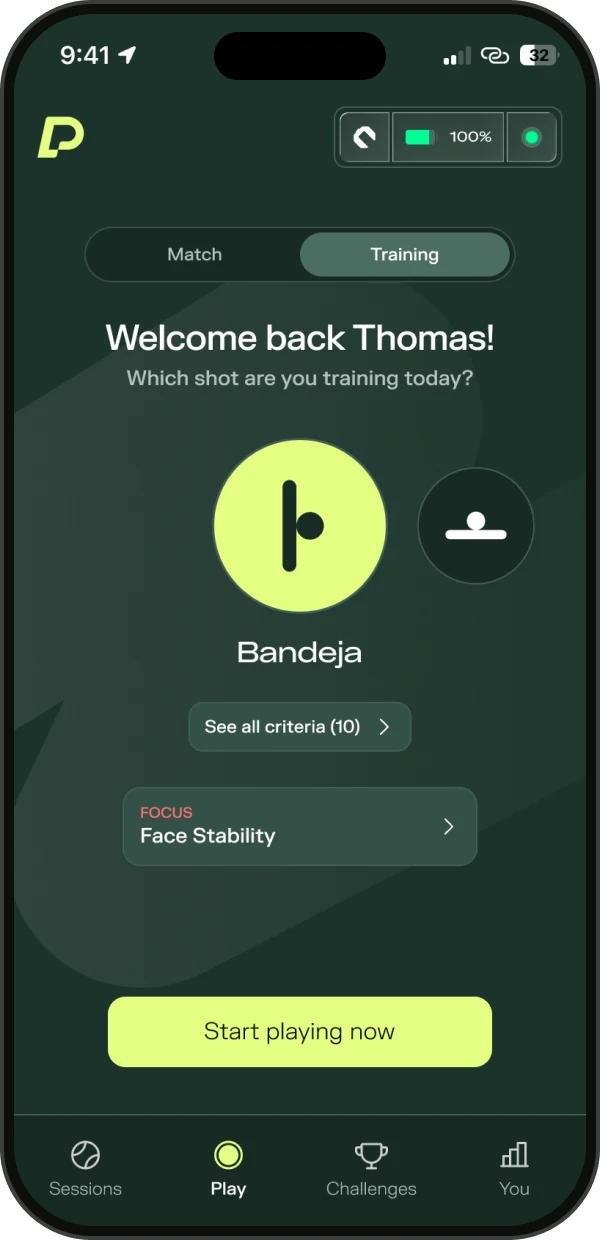
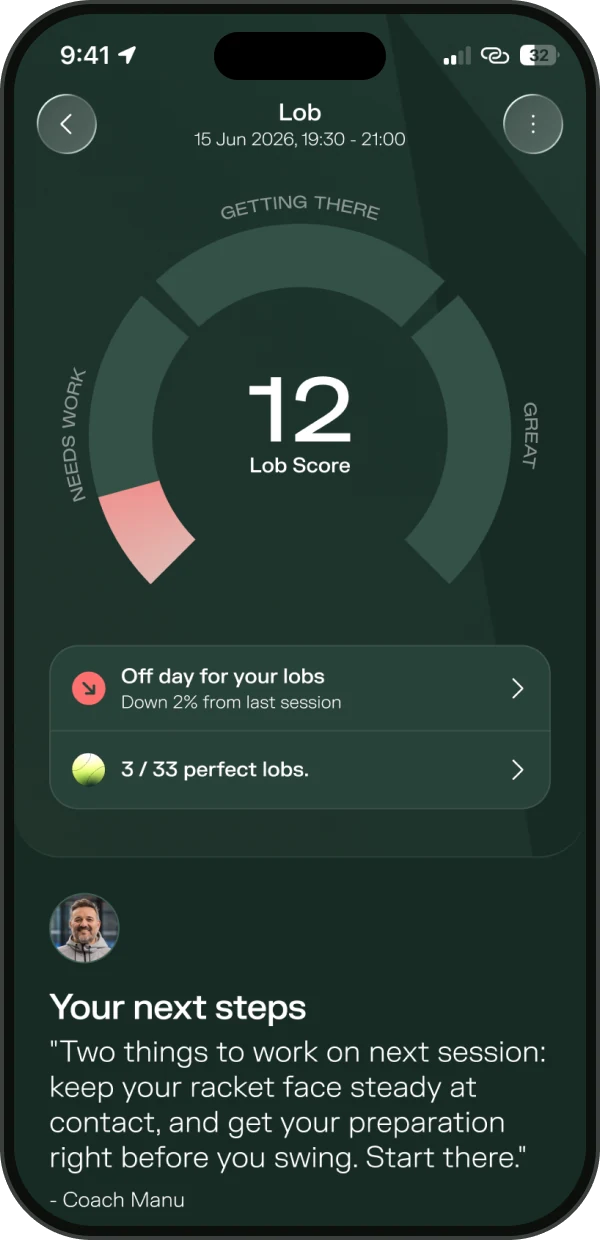
In training mode you choose the shot you are practising and hit at least five smashes. The sensor measures every attempt on a set of criteria and compares it with reference swings from professional players. Each criterion is set so that a pro misses it only about one time in ten, so a pro scores around 90. Your smash score is the share of attempts that pass, averaged over all criteria. This training score is separate from the Smash Factor you see after a match: it shows how close your technique is to the pros.
What a good smash looks like to the sensor:
- High preparation. Racket and elbow well above the shoulder before you swing.
- A full backswing. A big loading movement, body turned sideways.
- Clean contact. A firm, sharp hit rather than a soft or brushed one.
- Wrist snap. An active wrist at contact.
- A smooth finish. No braking after contact: the racket swings through.
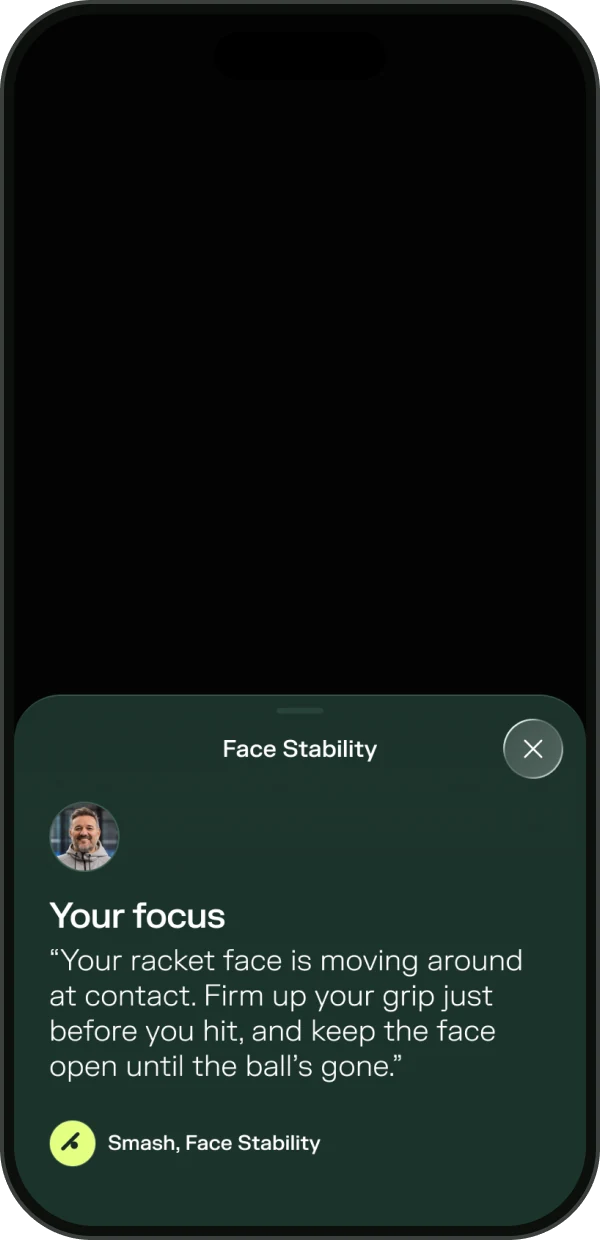
After the session Coach Manu names the two criteria to work on next and the two that went well, explains how to fix each one, and shows your trend over your last ten training sessions.
Frequently asked questions
What is a good Smash Factor?
It is personal: compare your own average over time. A higher average after a few weeks of training means your technique is improving.
Is a flat smash or a kick smash better?
The flat smash is safer to win the point at club level. The kick smash needs more spin and is used to force a weak return or to play por 3.
Why does my smash come back?
A flat smash that lands deep comes off the back glass. Aim lower and shorter, or use topspin so it bounces out of reach.
Next: the volley, or back to the overview of all padel shot types. See how Padelplay scores your smash.

