


Short answer
The padel serve is underhand: bounce the ball behind the service line, hit it at or below waist height, and send it diagonally into the opposite service box. Most good serves are sliced and aimed at the side glass, the glass behind the receiver or the body, followed straight away by a move to the net. The return is usually a low ball to the feet of the server or a lob over the net player, so the serving team cannot attack.
This guide is part of our overview of all padel shot types.
The serve rules in short
- Behind the line. Stand behind the service line, between the centre line and the side wall.
- Bounce first. Bounce the ball on the ground behind the service line before you hit it.
- At or below the waist. Hit the ball at or below waist height.
- Diagonal. The ball must land in the opposite service box. It may then hit the side or back glass, but not the fence first.
- Two chances. You get two serves, like in tennis.
The serve (Prodigy Padel Academy)


The serve, step by step
- Side-on stanceStand sideways, front foot pointing towards the target box.
- Drop and bounceDrop the ball beside your front foot so it bounces in front of you.
- Short backswingTake the racket back at about waist height, continental grip.
- Hit through with sliceMeet the ball at or below the waist and brush under and through it for a low, sliced serve.
- Move to the netFollow your serve in: you want to play the first volley from the net.
Where to serve
To the side glass
A sliced serve that bounces and goes into the side glass. The ball comes off low and wide.
To the T
Down the middle, towards the glass behind the receiver. Takes away the angle.
To the body
Into the receiver’s body. Hard to return with a full swing.
The return
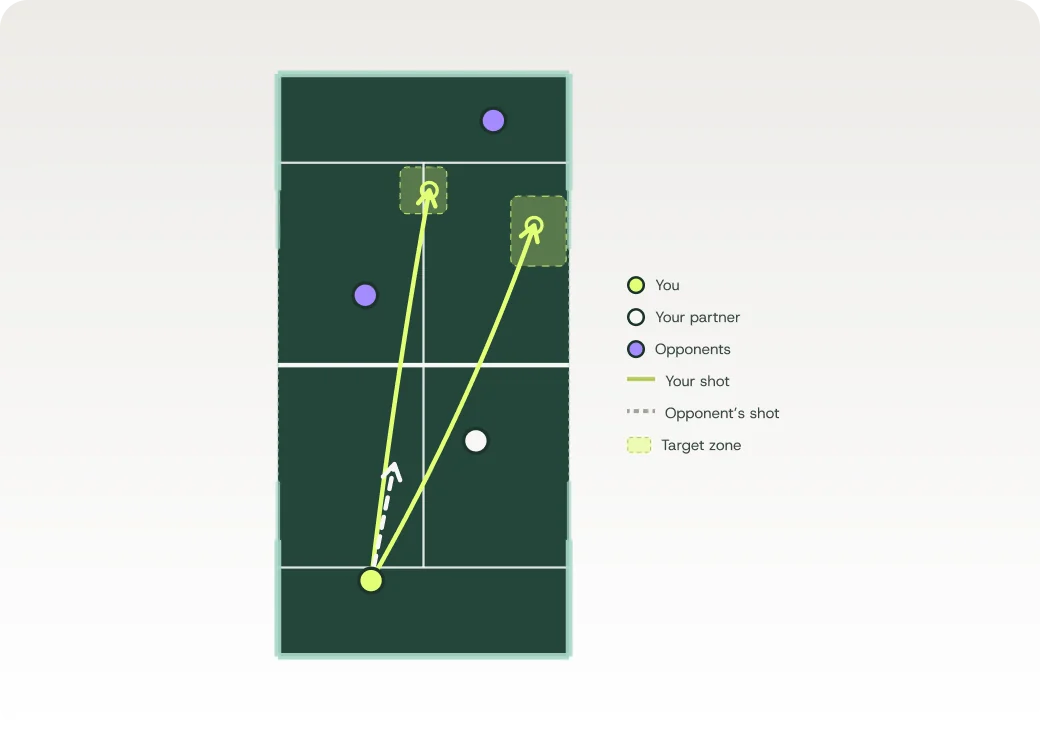
The return decides whether the serving team can attack. Keep it simple: a low ball to the feet of the server as they move forward, or a lob over the net player. Avoid hard, high returns: they give the net player an easy volley.
The return (Prodigy Padel Academy)


The most common mistakes
Serving hard
A fast, flat serve comes off the glass at a good height for the receiver. Slice and placement work better.
Staying back after the serve
The serving team should move to the net. Follow your serve in.
Hitting above the waist
It is a fault. Keep the contact at or below waist height.
Returning hard and high
Gives the net player an easy volley. Return low or lob.
Always the same serve
Mix side glass, T and body so the receiver cannot settle.
Foot faults
Stay behind the line until you have hit the ball.
Common mistakes (Prodigy Padel Academy)


How Padelplay tracks the start of the point
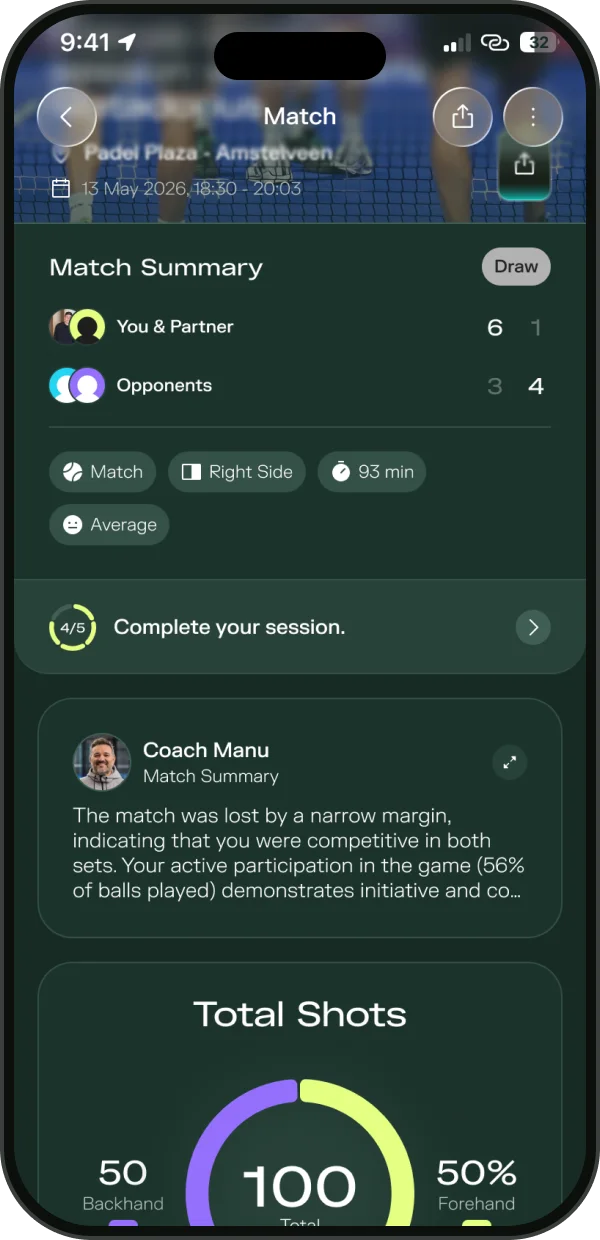
Not in the app yet. Padelplay does not recognise the serve and the return as shots of their own yet. See which shots it recognises today.
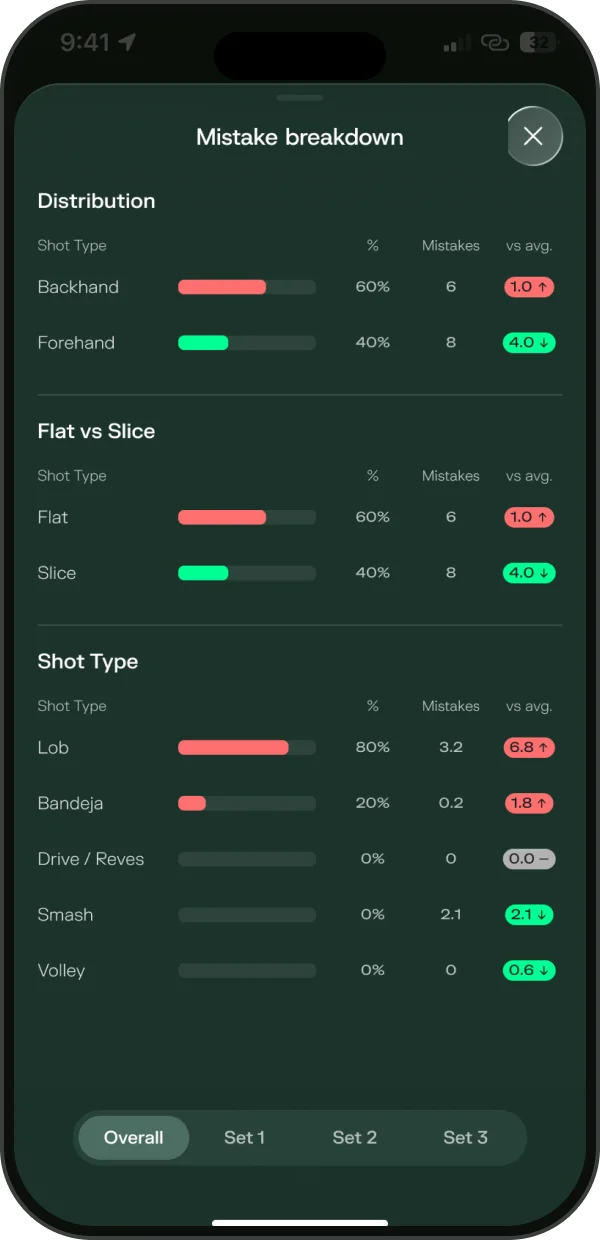
Tag a mistake with one tap on the sensor whenever a serve or return goes wrong, and see in the mistake breakdown which shots cost you points.
Frequently asked questions
Is the padel serve underhand?
Yes. You bounce the ball and hit it at or below waist height, diagonally into the opposite service box.
Can the serve hit the glass?
After it bounces in the service box it may hit the side or back glass. If it hits the fence after the bounce, it is a fault.
Should I serve and volley?
Yes, in most cases. The serving team usually moves to the net after the serve.
Next: the volley, your first shot after the serve, or back to the overview of all padel shot types. See how Padelplay tracks every shot.

