


Short answer
A padel volley is a short, compact shot played before the ball bounces, usually at the net. Use the continental grip, keep the racket up and in front of you, step towards the ball, and push through it with one short, steady movement instead of swinging. Most volleys are played with a little slice, aimed deep or at the feet of your opponents. Placement wins more points than power.
This guide is part of our overview of all padel shot types.
Grip and ready position
Use the continental grip for both forehand and backhand volleys, so you never have to change grip at the net. Stand about two to three metres from the net, knees bent, weight on the front of your feet, racket up in front of your chest. Split step every time your opponent hits.
The forehand volley, step by step
- Split stepA small hop as your opponent hits, so you can move in any direction.
- Turn your shouldersA small shoulder turn is enough. No big backswing: the racket stays in front of you.
- Step towards the ballStep forward with your opposite foot, so your weight goes into the shot.
- Meet it in frontMeet the ball in front of your body, at a comfortable height, with a slightly open racket face. Set your wrist before the ball arrives and keep the racket head up as you push through.
- Short, smooth finishKeep the follow-through short and controlled, without stabbing at the ball or braking hard, and get back into the ready position.
The backhand volley
The backhand volley follows the same steps, with the racket face slightly open and the contact further in front of your body. Keep your wrist firm and use your shoulder, not your wrist, to direct the ball. Many players find it more stable than the forehand volley, because the movement is shorter.
Forehand and backhand volley (Prodigy Padel Academy)


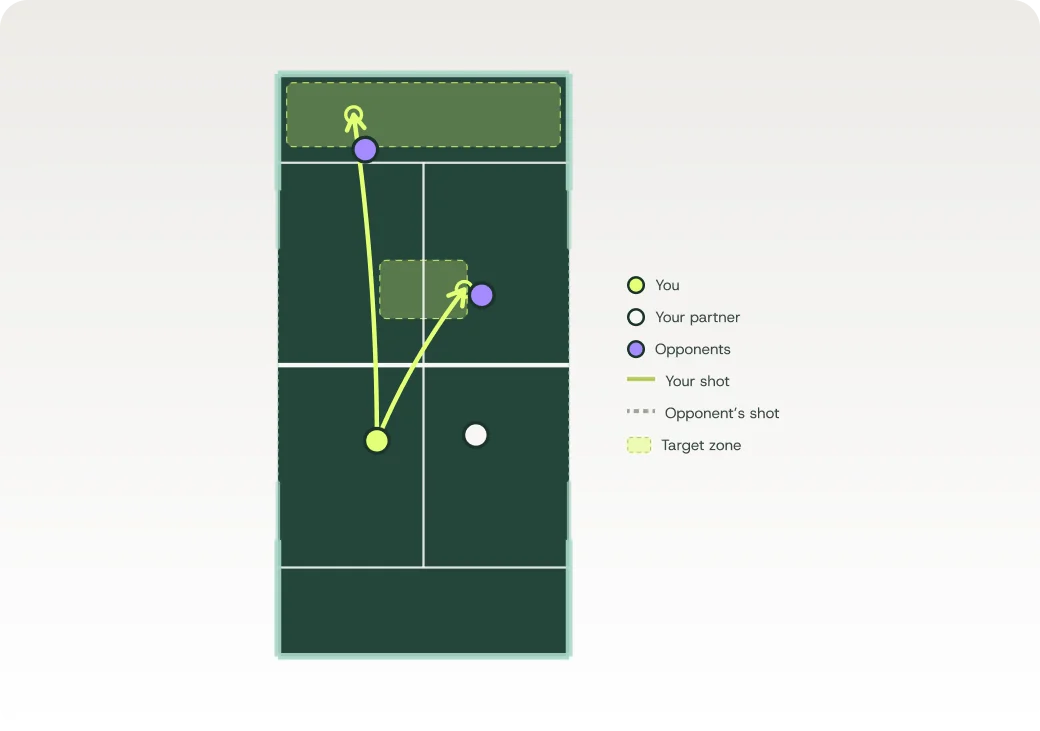
Four volleys worth knowing
Deep volley
Your default. Deep towards the back glass, so your opponents stay back and you keep the net.
Volley to the feet
Low at the feet of an opponent who comes forward. Forces them to play up.
Block volley
Against a hard ball: hold the racket still and let the ball bounce off it. No swing at all.
Drop volley
A soft volley that dies just over the net. Use it when your opponents are deep at the back.
Block and drop volley (Prodigy Padel Academy)


The most common mistakes
Swinging
A big backswing makes the volley late and uncontrolled. Keep it short.
Racket too low
With the racket down you are late on every fast ball. Keep it up in front of your chest.
Standing still
Without a step towards the ball, the volley has no weight and no depth.
Too close to the net
Right at the net you are easy to lob. Stay two to three metres back.
Going for winners
At club level most volley points are won by placement, not power.
Wrist volleys
A loose wrist sends the ball anywhere. Keep it firm and use your shoulder.
Common mistakes (Prodigy Padel Academy)


Drills
- Volley to volleyBoth players at the net, two to three metres back. Keep the ball in play with soft volleys for two minutes.
- Deep or feetYour partner feeds from the back. Call “deep” or “feet” before each ball and aim there.
- Two against oneTwo players at the back, one at the net. The net player only volleys deep and recovers after every shot.
How to measure your volley with Padelplay
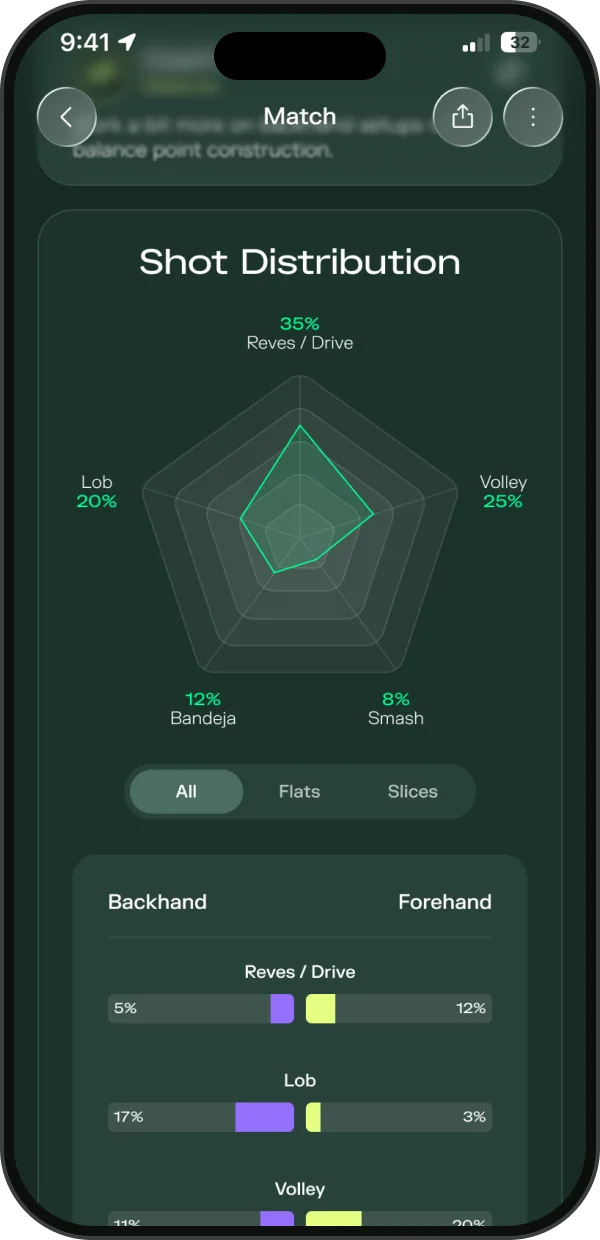
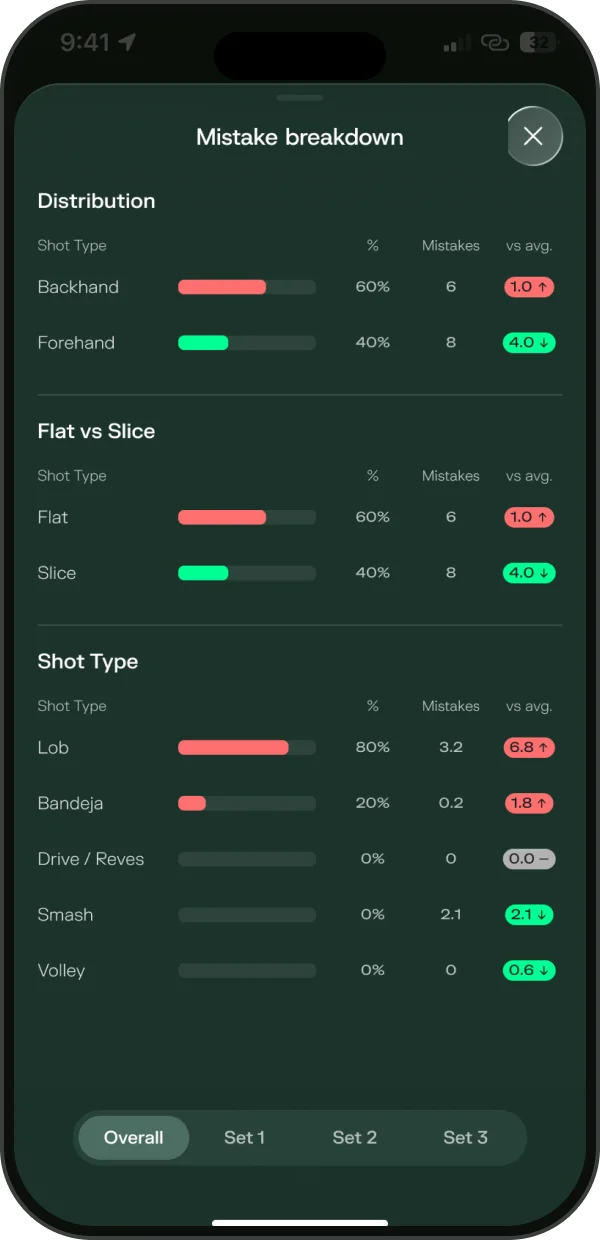
Padelplay recognises the volley as its own shot type, forehand or backhand. Your shot distribution shows how many volleys you play and on which side; the mistake breakdown shows which volleys cost you points.
Train your volley with Padelplay training mode (beta)
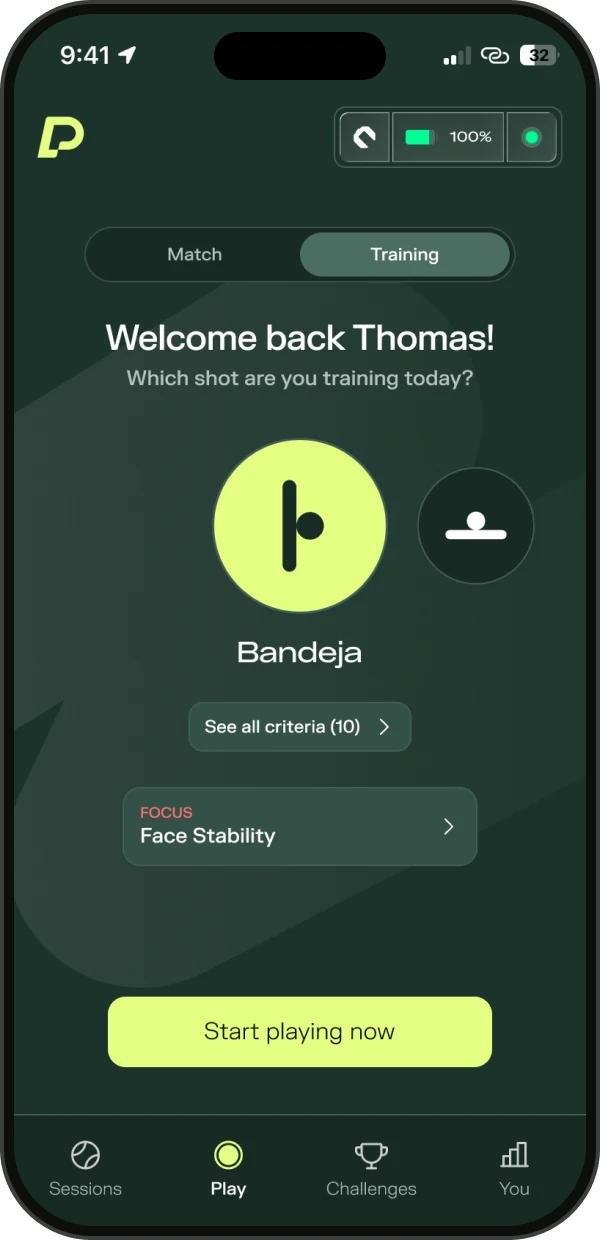
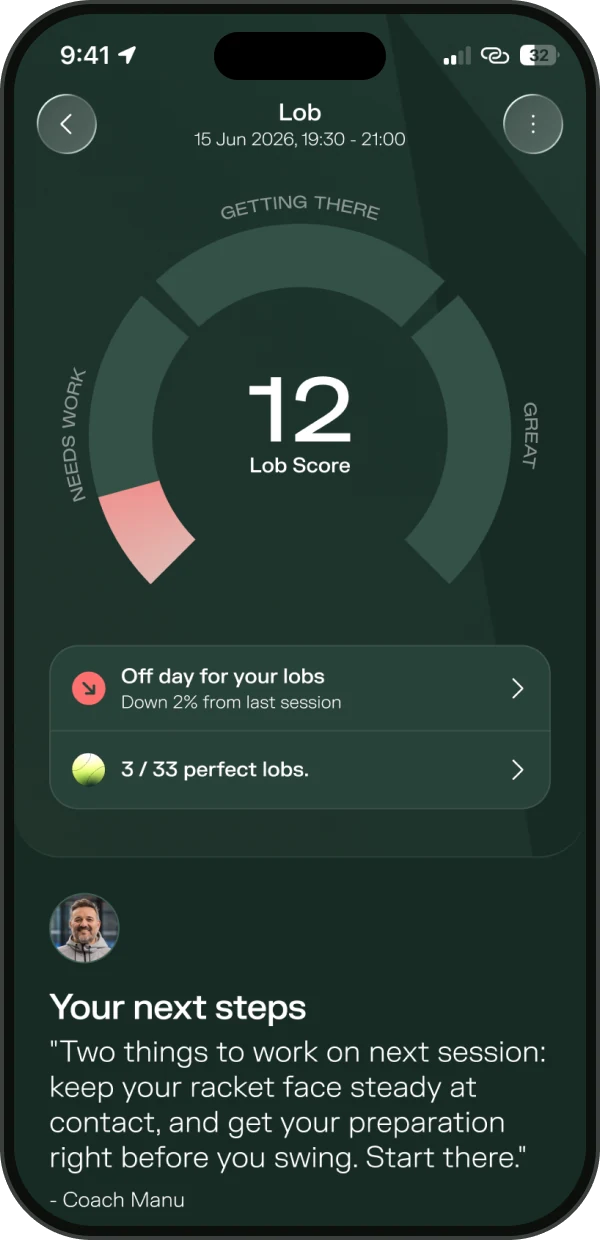
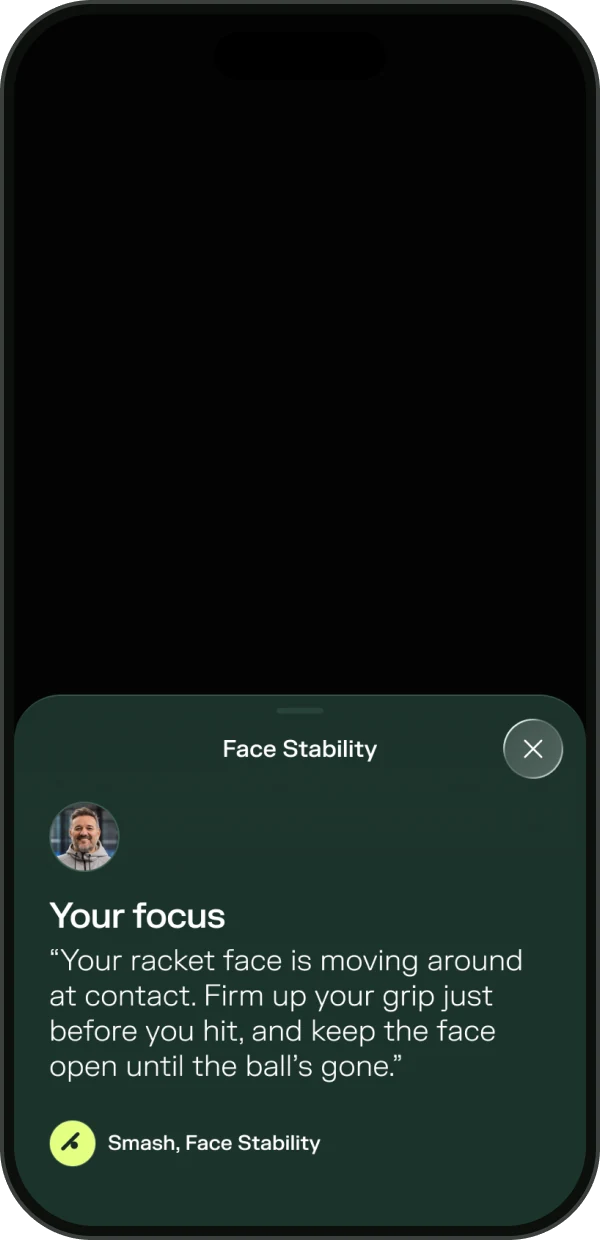
In training mode you choose the shot you are practising and hit at least five volleys. The sensor measures every attempt on a set of criteria and compares it with reference swings from professional players. Each criterion is set so that a pro misses it only about one time in ten, so a pro scores around 90. Your volley score is the share of attempts that pass, averaged over all criteria.
What a good volley looks like to the sensor:
- Soft hands. Less racket speed and less power at contact than you might think: the pros cushion the ball.
- A steady face. The racket face does not twist at contact.
- A firm, early wrist. The wrist is set before contact and does not flick.
- Racket head up. The arm rises into contact, with one steady push and no late burst of speed.
- In front, at a comfortable height. Contact in front of the body.
- A short, smooth finish. No stab at the ball.
After the session Coach Manu names the two criteria to work on next and the two that went well, explains how to fix each one, and shows your trend over your last ten training sessions.
Frequently asked questions
Which grip should I use for the volley?
The continental grip, for both forehand and backhand, so you never need to change grip at the net.
How far from the net should I stand?
About two to three metres. Closer and you are easy to lob, further back and the ball drops to your feet.
Should I volley flat or with slice?
Mostly with a little slice. It gives control and keeps the ball low. Flat volleys are for finishing a high, easy ball.
Next: the bandeja, for when your opponents lob you, or back to the overview of all padel shot types. See how Padelplay tracks every shot.

