


Short answer
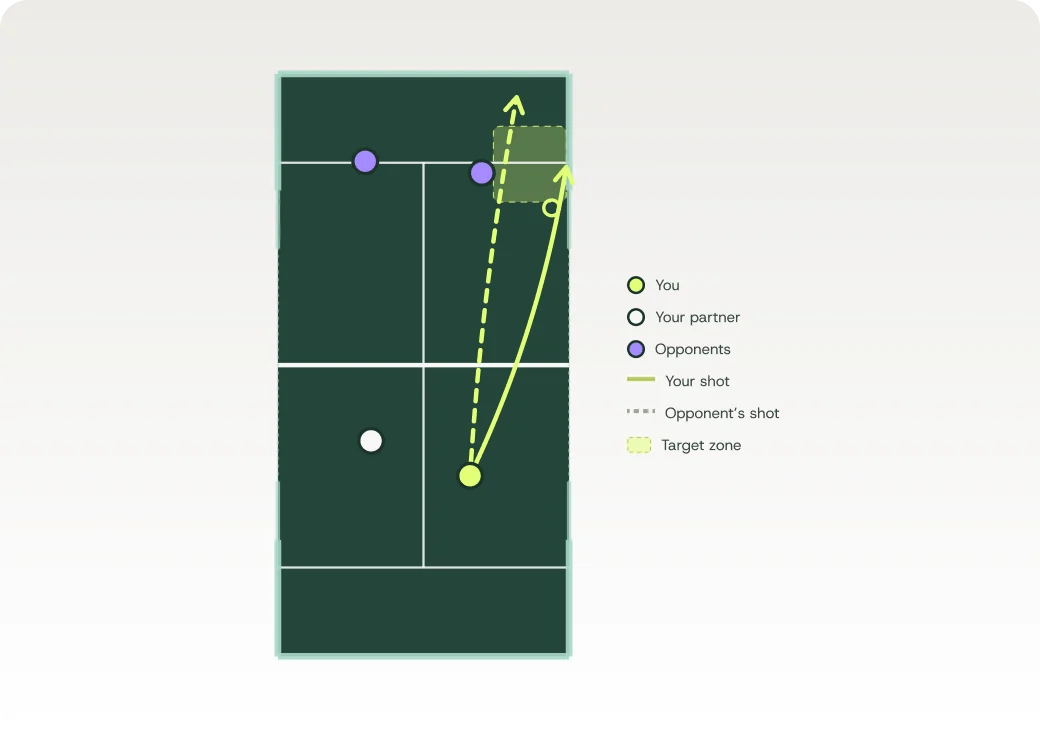
The víbora is an overhead hit with pace, slice and side spin, usually from a little further to the side of your body than a bandeja. You cut across the ball from high to low and from outside to inside, so it bounces low and comes off the side glass fast. Use it when a lob is not quite good enough to smash but gives you the time to attack. Then move back to the net.
This guide is part of our overview of all padel shot types. Learn the bandeja first: the víbora builds on it.
Víbora or bandeja?
| Bandeja | Víbora | |
|---|---|---|
| Goal | Keep the net, reset the point | Keep the net and put pressure on your opponents |
| Pace | Slow to medium | Medium to fast |
| Spin | Slice (backspin) | Slice with side spin |
| Contact point | In front of you, at head height | More to the side of your body, often a little lower |
| Typical target | Deep corner or side glass | Side glass, low, so the ball stays close to the glass |
| Risk | Low | Higher: needs more timing |
When to play a víbora
Play it when the lob lands around mid-court and you can reach it in balance, but it is not short or high enough to smash. It works best on lobs to your forehand side, where you can open your body and swing across the ball. When you are pulled far back, or the lob is very high and deep, the safer bandeja is the better choice.
Technique, step by step
- Turn and move earlyTurn sideways as soon as you read the lob and move with side steps, just as for the bandeja.
- Racket high and behindBring the racket up and back early, with the racket head pointing up. Continental grip.
- Let the ball come to the sideMeet the ball more to the side of your body than for a bandeja, at around head height or slightly lower.
- Swing across the ballAccelerate and cut across the ball from high to low and from outside to inside. This gives the side spin that makes the ball shoot off the side glass.
- Use your bodyRotate your shoulders and hips into the shot. The power comes from the rotation, not only from your arm.
- Recover to the netFinish across your body and move forward straight away. A víbora that pushes the opponents back is wasted if you do not take the net.


The five most common mistakes
Playing it from too far back
Too far from the net, the víbora becomes a weak overhead. Use the bandeja when you are pushed back.
No side spin
Without the cut across the ball it is just a flat overhead that bounces up. Swing from outside to inside.
Arm only
Without the shoulder rotation you lose pace and control. Turn your body into the shot.
Aiming for the middle
A víbora into the middle sits up for your opponents. Go for the side glass.
Not following it in
If you stay back, your opponents get time to lob again. Move forward after the shot.
Drills
- Bandeja firstTen bandejas from fed lobs, then ten víboras from the same lobs. Feel the difference in contact point and swing.
- Side-glass targetMark a zone on the side glass near the back. Count how many víboras out of ten hit it low.
- Choose liveYour partner lobs at different depths. You call “bandeja” or “víbora” before you hit, and play the shot you called.
How to measure your víbora with Padelplay
Not in the app yet. Padelplay does not recognise the víbora as a shot of its own yet. See which shots it recognises today.
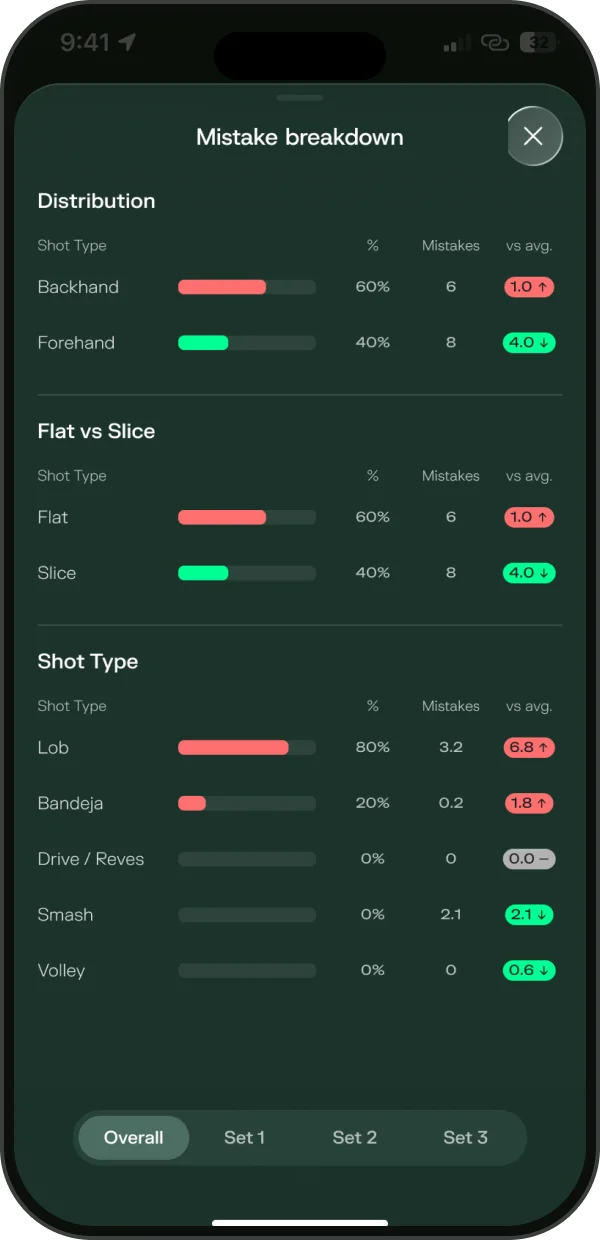
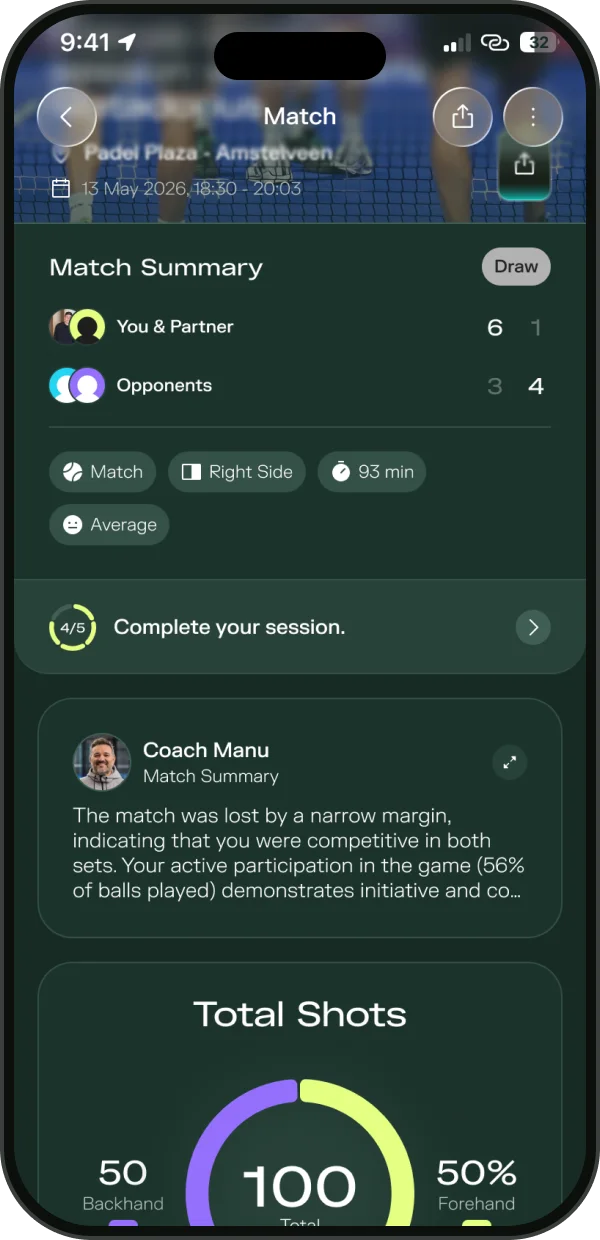
Follow your overheads in the shot distribution and the mistake breakdown, and tag a mistake with one tap on the sensor whenever an overhead goes wrong.
Frequently asked questions
Why is it called a víbora?
Víbora is Spanish for viper: the ball “bites” low off the glass, like a snake.
Is the víbora harder than the bandeja?
Yes. It needs more timing and body rotation. Most coaches teach the bandeja first.
Can I play a víbora on my backhand side?
It is much harder and rare at club level. On the backhand side the bandeja is usually the better choice.
Next: the smash, or back to the overview of all padel shot types. See how Padelplay tracks every shot.

