


Short answer
The bandeja is a controlled overhead with slice that you play when a lob pushes you back but you want to keep the net. Turn sideways early, move back with side steps, meet the ball slightly in front of you at about head height, cut across it with an open racket face and aim deep towards the back corner or the side glass. Then move straight back to the net. It is not meant to win the point; it is meant to keep it.
This guide is part of our overview of all padel shot types.
What the bandeja is for
When your opponents lob you, you have three choices: run back and play the ball after it bounces, hit a full smash, or play a bandeja. The bandeja is the middle option. You take the ball in the air, keep it under control and send it deep, so your opponents cannot attack while you hold your position at the net.
A bandeja is not meant to win the point. It is meant to keep the net.
Good players use it as a reset: a ball that is hard to attack, played from a position where they still control the rally. Players who try to turn it into a smash lose control; players who play it too softly give their opponents an easy ball.
Bandeja, víbora or smash?
All three are overheads. Which one you choose depends on how much time you have and where the lob lands.
| Situation | Shot | Why |
|---|---|---|
| The lob is high and deep, and pulls you back | Bandeja | Keeps the net with little risk |
| The lob is a little short or to the side, and you are in position | Víbora | More pace and side spin, puts pressure on your opponents |
| The lob is short, in front of you and high enough to hit hard | Smash | Finishes the point or forces a weak reply |
| The lob is over your head and too deep to reach in balance | Let it bounce | Defend it off the back glass instead of playing an overhead off balance |
Grip and ready position
Use the continental grip, the same grip as for the volley: hold the racket as if you were holding a hammer, with the edge pointing forward. It lets you open the racket face for slice without changing grip. At the net, keep the racket up in front of your chest, so you are ready for a volley and for a lob.
Technique, step by step
- Read the lob earlyAs soon as your opponent lifts the ball, call it and start moving. Every step you gain gives you more time to play the bandeja in balance.
- Turn sidewaysYour non-racket shoulder points towards the net and your feet are parallel to the side wall. This turn is what gives you control and depth.
- Move back with side stepsUse side steps or crossover steps. Never backpedal facing the net: you lose balance and it is the easiest way to fall.
- Racket up earlyBring the racket up and behind your head before the ball arrives, with your elbow above shoulder height and a full backswing. Point your free arm at the ball to judge its height.
- Meet the ball at head heightHit it slightly in front of your body and a little to the side, lower than a smash. Your arm is extended but not fully stretched.
- Cut across the ballSwing forward and slightly across the ball with an open racket face, and accelerate through contact with a little wrist snap at the end. The slice keeps the ball low after it bounces.
- Recover to the netLet the racket swing all the way through and finish across your body, then take two or three steps forward and split step as your opponent hits.
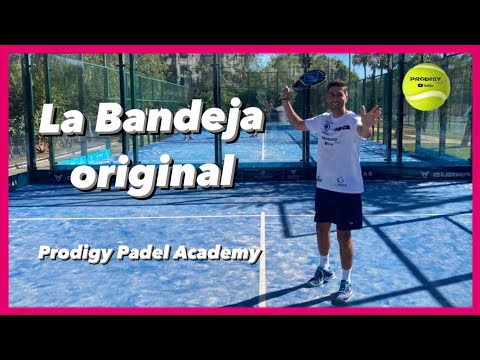
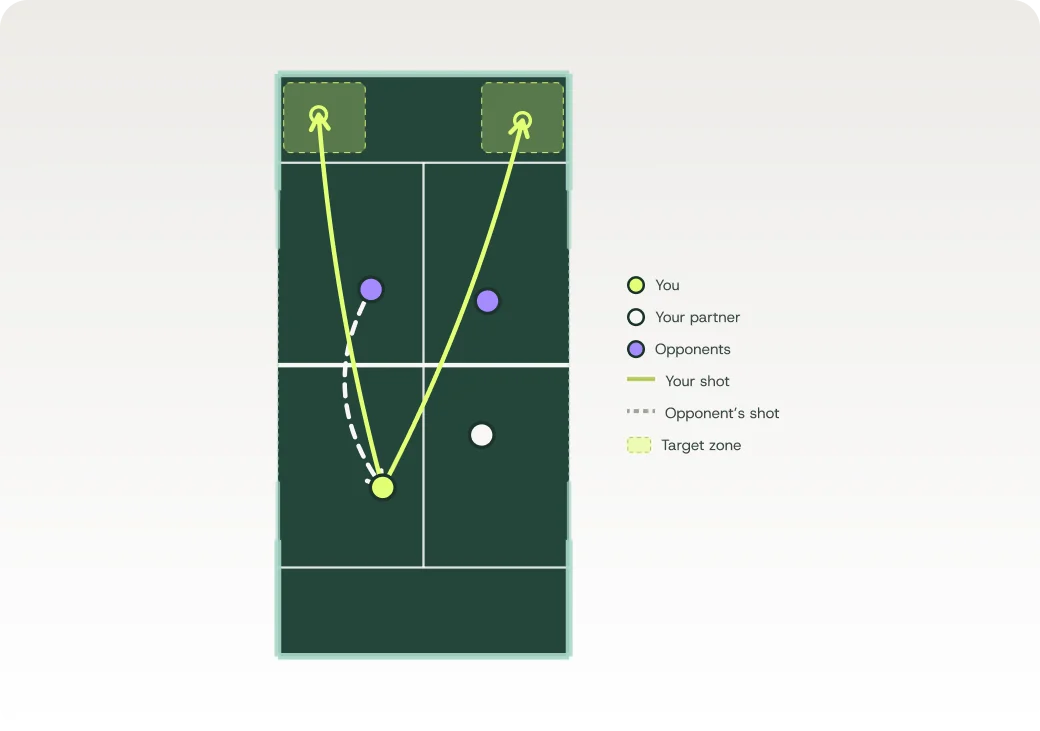
Three bandejas worth knowing
Deep to the corner
The standard bandeja. It bounces deep and dies in the corner, so your opponents have to defend from the glass.
Onto the side glass
Aimed at the side glass near the back. The ball comes off sideways and low, which is hard to attack.
Low to the feet
When your opponents run forward after their lob, a lower, flatter bandeja at their feet forces them to volley up.
The six most common mistakes
Hitting flat
A flat bandeja comes off the back glass high and gives your opponents an easy ball. Swing freely, but cut across the ball: the slice controls it, not a slower arm.
Facing the net
Without the sideways turn you only use your arm, and both control and depth suffer. Turn first, then hit.
Letting the ball drop
Late contact sends the ball into the net or straight up. Move back earlier so you meet it at head height.
Aiming for the middle
A bandeja that lands in the middle and bounces up is the perfect ball to attack. Aim for the corners.
Braking the swing
Slowing down to “play it safe” makes the bandeja short and easy to attack. Prepare fully and swing through to a complete finish.
Staying back
You played the bandeja to keep the net. Move forward straight away, or the shot was wasted.
Drills to make it reliable
Work from easy to match-like. Each drill builds on the one before.
- Shadow swingsWithout a ball: three sets of ten. Turn, side step back, swing, recover forward. Focus on the turn.
- Fed bandejasYour partner stands at the net opposite and feeds high balls by hand or racket. Twenty balls, aiming for one back corner.
- Lob and recoverYour partner lobs from the back; you start at the net, move back, play a bandeja and return to the net. Ten balls per side.
- Target practicePut a towel in the back corner. Count how many bandejas out of ten land within a metre of it, and write the number down every week.
- Live pointsEvery point starts with a lob. The player at the net has to play a bandeja and keep the net. Play to seven.
How to measure your bandeja with Padelplay
Feeling is unreliable here: a bandeja that felt good can still have given your opponent an easy ball. Padelplay recognises the bandeja as its own shot type, with its side and its spin, so you can see what actually happens.
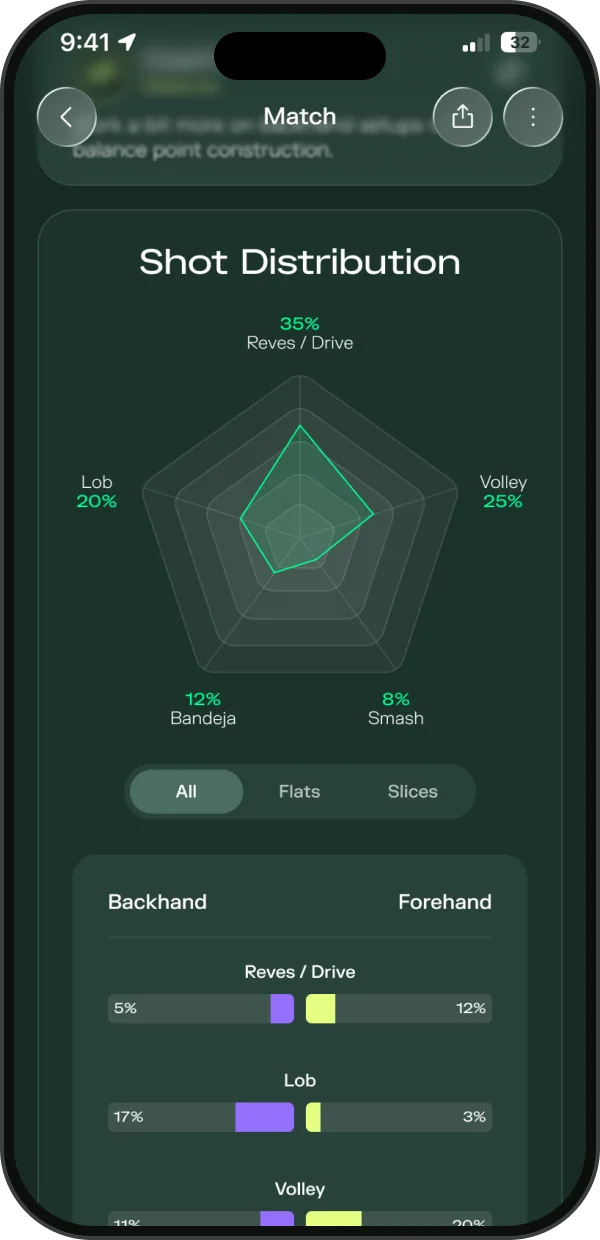
- How many you play. Your shot distribution shows your share of bandejas per match and over time. If you smash balls that should be bandejas, you will see it.
- Whether you slice it. Switch the shot distribution to Slices to see how many of your bandejas you actually cut.
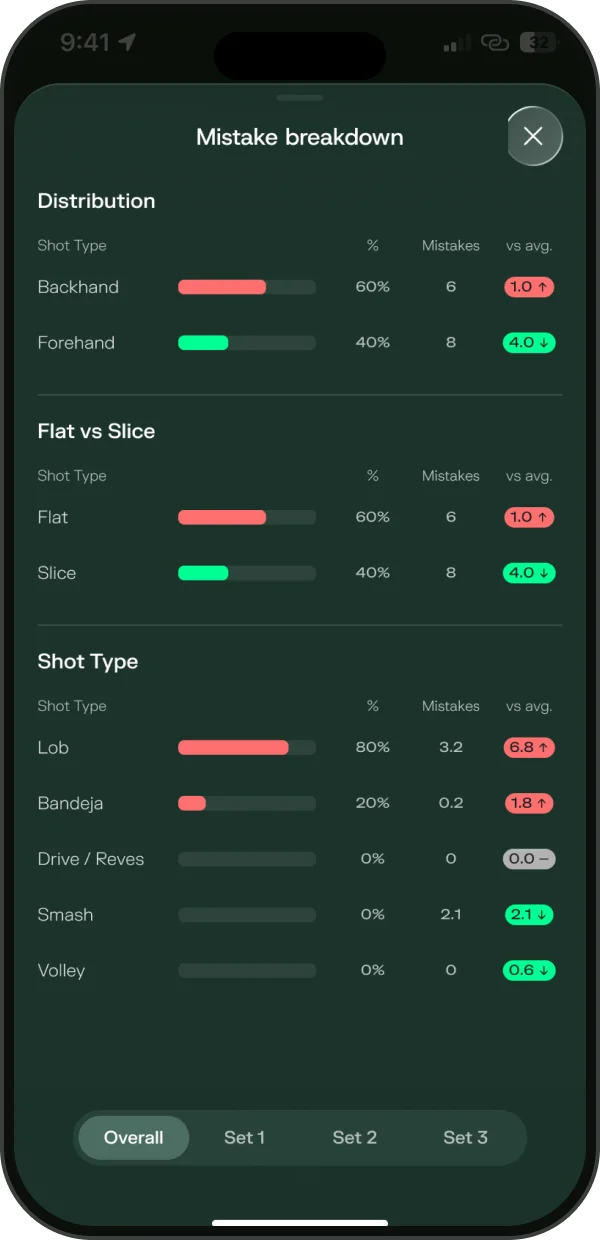
- Your mistakes on it. Tag a mistake with one tap on the sensor. The mistake breakdown shows your bandeja mistakes compared with your average.
- Whether training works. After a few weeks of drills, your share of bandejas in matches should go up and your mistakes on it should go down.
- What to work on next. After a match with a score and at least 50 shots, Coach Manu points out what stood out in your game.
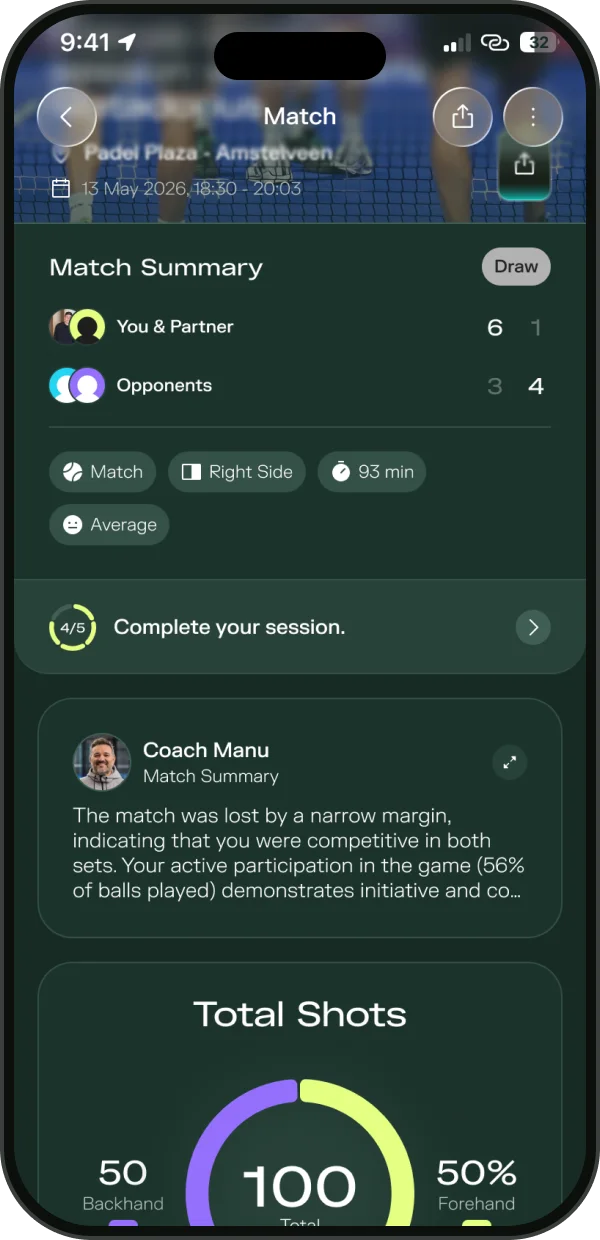
Train your bandeja with Padelplay training mode (beta)
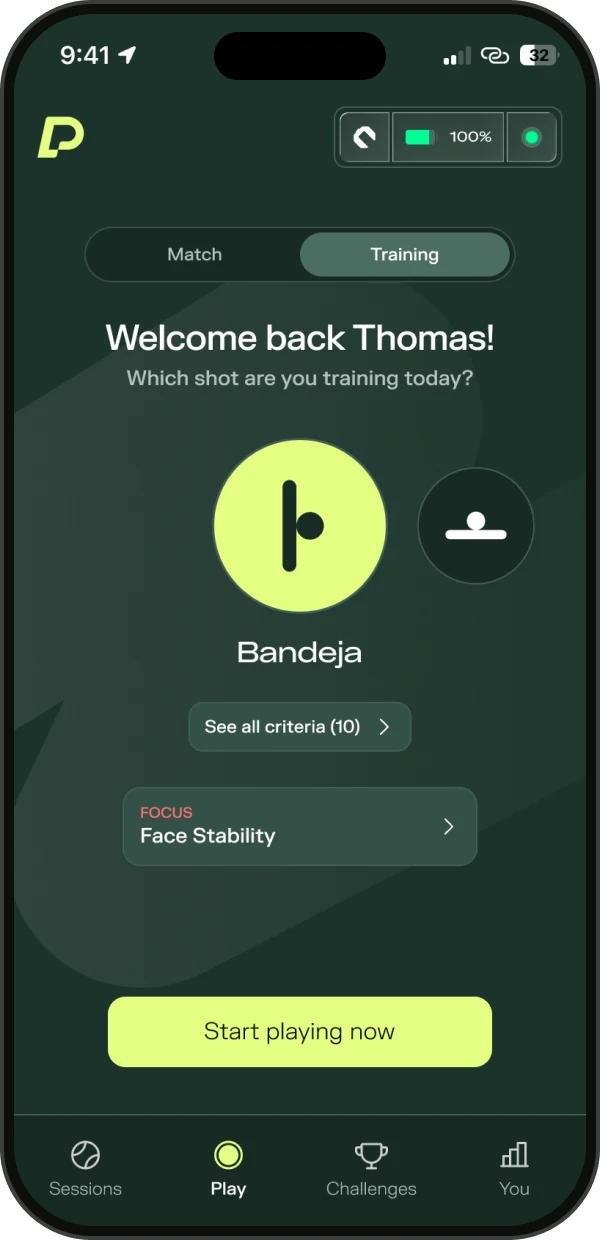
In training mode you choose the shot you are practising and hit at least five bandejas. The sensor measures every attempt on a set of criteria and compares it with reference swings from professional players. Each criterion is set so that a pro misses it only about one time in ten, so a pro scores around 90. Your bandeja score is the share of attempts that pass, averaged over all criteria.
What a good bandeja looks like to the sensor:
- Racket and elbow up. Racket and elbow above shoulder height in the preparation.
- A full preparation. A complete backswing with your body turned sideways.
- Pace through the ball. Swing speed and racket speed at contact close to the pros.
- Wrist snap. A short, active wrist at the end of the swing.
- A full follow-through. The racket keeps going after contact instead of stopping.
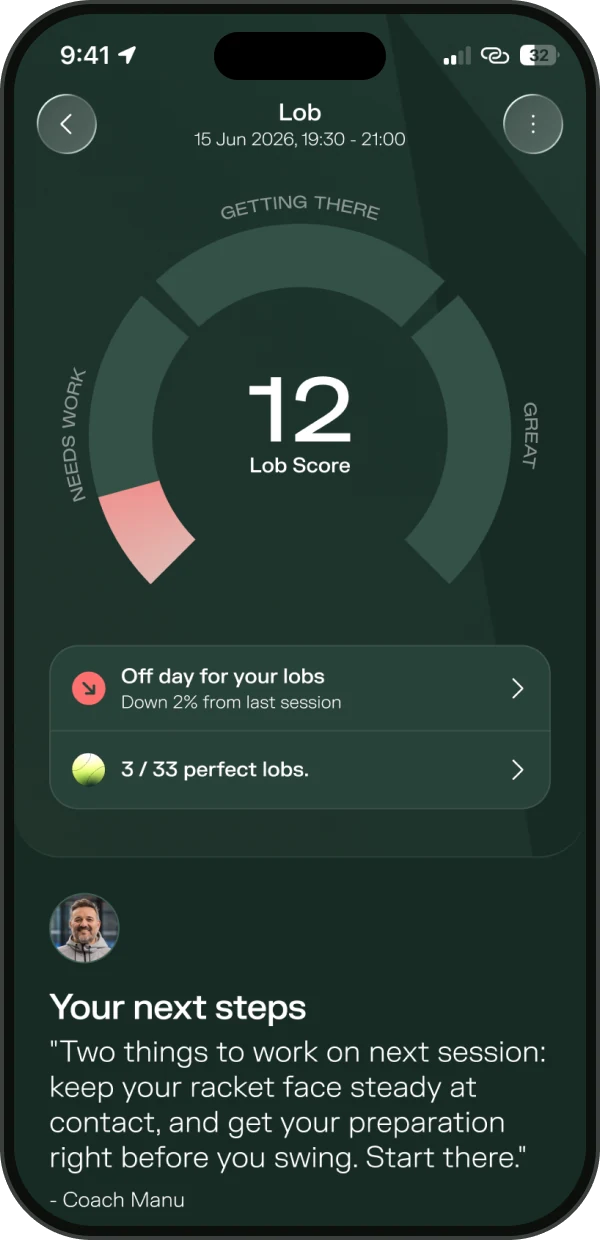
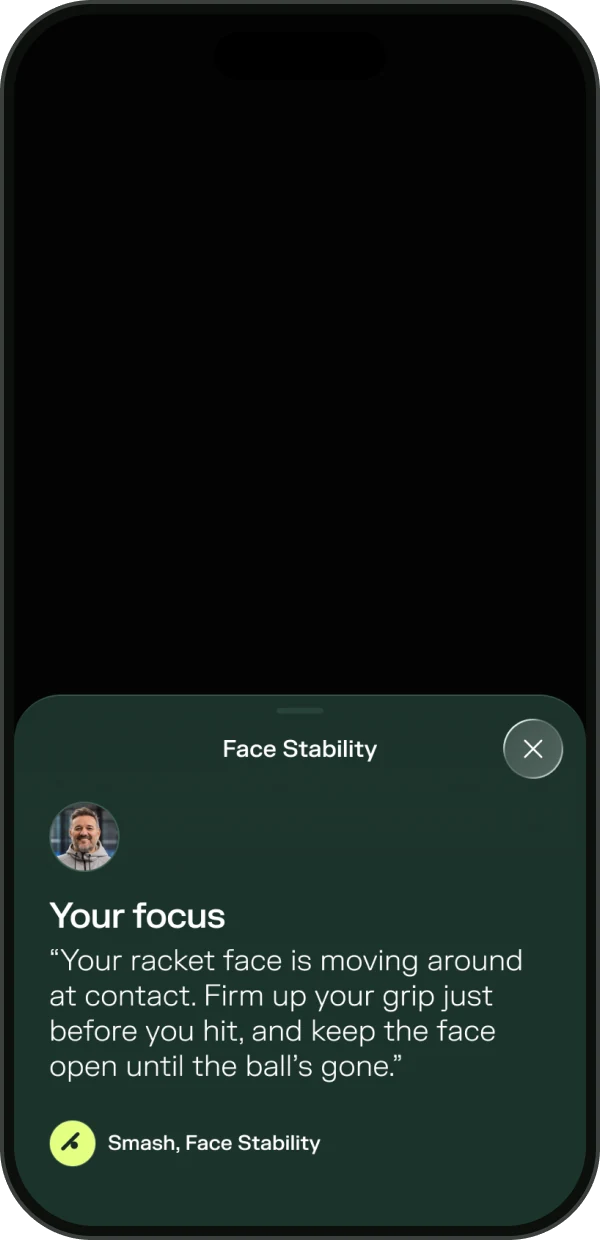
After the session Coach Manu names the two criteria to work on next and the two that went well, explains how to fix each one, and shows your trend over your last ten training sessions.
Frequently asked questions
What is the difference between a bandeja and a smash?
A smash is played to win the point, with full power. A bandeja is played with control and slice, lower and from further back, to keep the net.
What is the difference between a bandeja and a víbora?
The víbora is faster and more aggressive, hit with side spin and usually from a little further to the side. The bandeja is safer and slower.
Should a bandeja come off the back glass?
It may touch the back glass, but it should come off low and close to the glass. A bandeja that bounces far off the back glass gives your opponents an easy ball.
Where should I stand after a bandeja?
Back at the net, about two to three metres from it, with a split step as your opponent hits.
How do I know if my bandeja is good?
It stays deep, bounces low, your opponents cannot attack it and you are back at the net in time. Padelplay shows whether it also goes wrong less often over time.
Next, learn the víbora, the more aggressive overhead, or go back to the overview of all padel shot types. Want to see your own bandejas? See how Padelplay tracks every shot.

