


Short answer
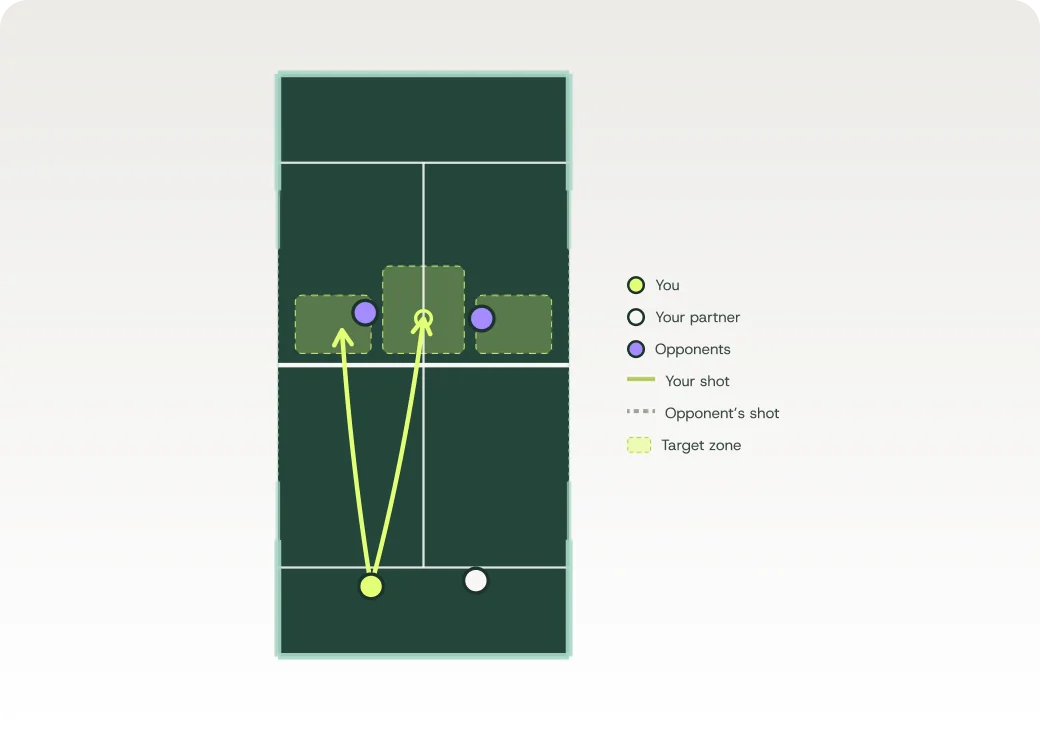
The forehand (often called the drive) and the backhand are your groundstrokes after the bounce, mostly from the back of the court. Compared with tennis they are shorter and more compact, and played with more slice: a low, controlled ball to the feet of the net players or through the middle is worth more than a hard one. Use a continental or slightly eastern grip, turn your shoulders and prepare early, and keep the finish short.
This guide is part of our overview of all padel shot types.
Flat, slice or topspin
| Flat | Slice | Topspin | |
|---|---|---|---|
| What it does | Fast, straight, bounces up | Low, slow, stays close to the glass | Dips at the feet after the net |
| Best for | Attacking a high, easy ball | Control and defence, the padel default | Passing a volleyer or dipping to the feet |
| Risk | Comes off the back glass if too deep | Floats if hit too high | Hard to control off low balls |
Forehand and backhand (Prodigy Padel Academy)


The forehand, step by step
- Ready and split stepWeight on the front of your feet, racket in front of you.
- Turn earlyTurn your shoulders as soon as you see the ball coming to your forehand. The racket goes back with the turn.
- Prepare fully, earlyGet the racket back with the shoulder turn, racket head roughly at the height of the ball, so the swing can build up steadily.
- Contact in frontMeet the ball in front of your body, at around hip height, with your weight moving forward and a steady racket face. Place it, do not hammer it.
- Short, smooth finishA shorter finish than your preparation, towards where you aim, without braking. Then recover.
The backhand, step by step
- Turn your shoulders fullyOn the backhand the turn is even more important: your back shoulder almost points at the net.
- Racket back, face slightly openTake the racket back early with the turn, face slightly open for slice.
- Contact further in frontMeet the ball further in front of your body than on the forehand.
- Cut through the ballFor a sliced backhand, swing from high to low through the ball and keep your wrist firm.
From the full padel course (Prodigy Padel Academy)


The most common mistakes
Tennis finish
A big, fast follow-through makes the ball fly and come off the back glass. Prepare fully, but keep the finish short.
Late turn
Without an early turn you hit with your arm only, and lose control.
Hitting too hard
Power from the back rarely wins the point. Placement and low balls do. A late burst of speed just before contact is the usual cause.
Running around the backhand
Avoiding the backhand pulls you out of position. Train it instead.
Too high over the net
A high ball gives the net players an easy volley. Aim low.
Not recovering
After the shot, get back into position and split step.
Common mistakes (Prodigy Padel Academy)

How to measure your groundstrokes with Padelplay
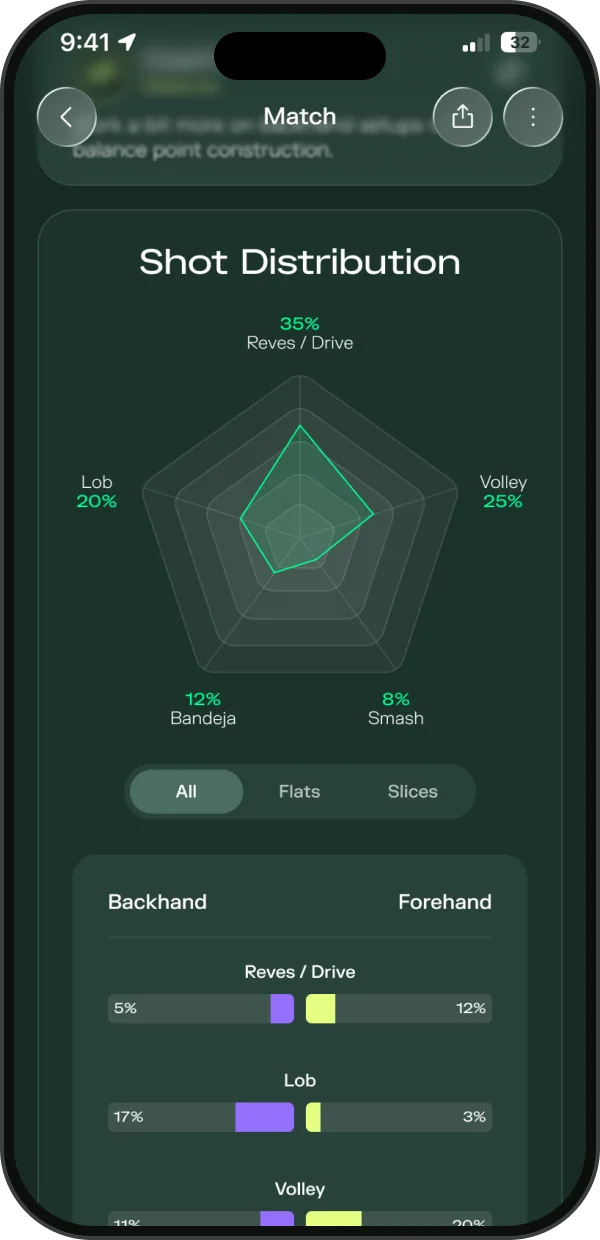
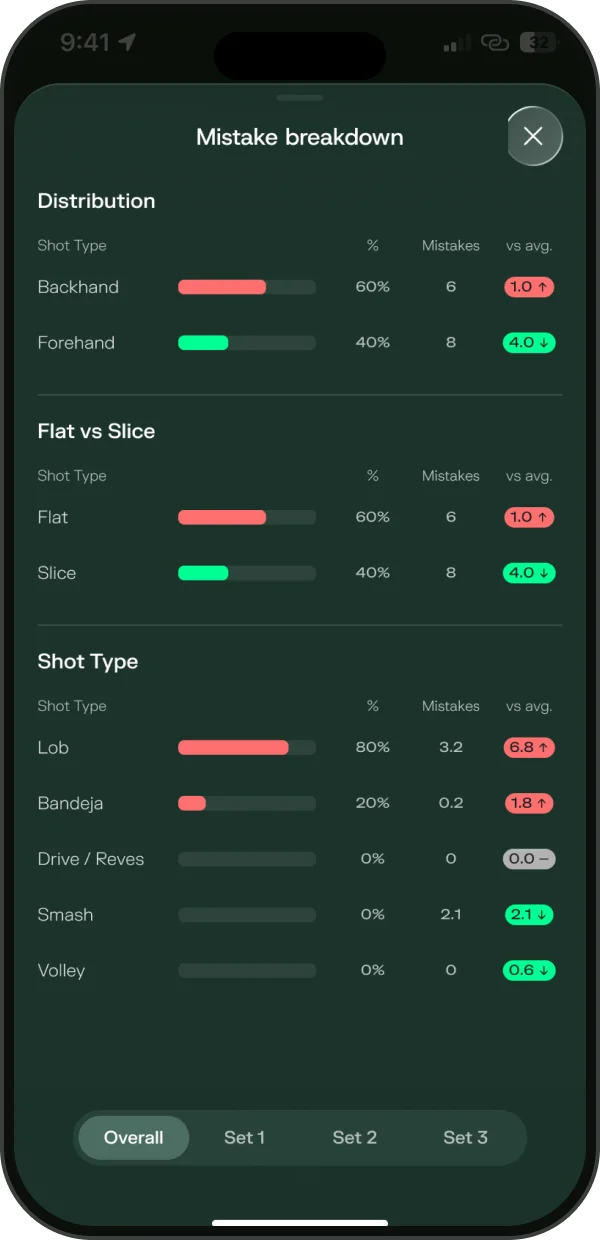
Padelplay records every drive with its side (forehand or backhand) and its spin (flat or slice). That makes your weak side visible: the split shows whether you avoid your backhand, and the mistake breakdown shows which side and spin cost you points.
Train your drive with Padelplay training mode (beta)
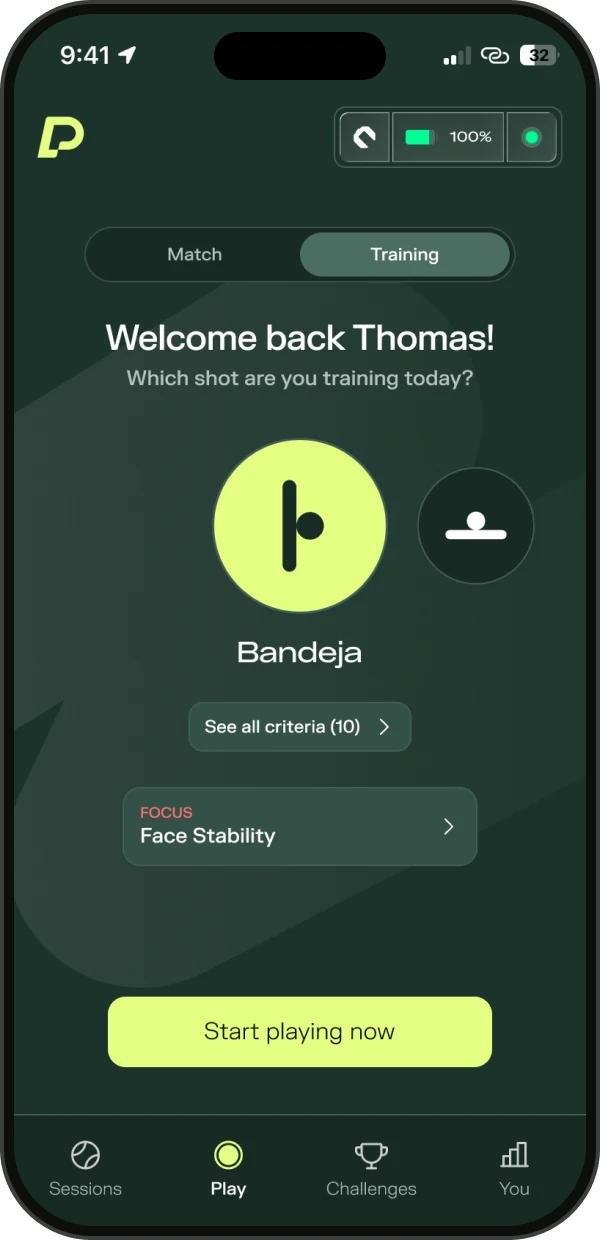
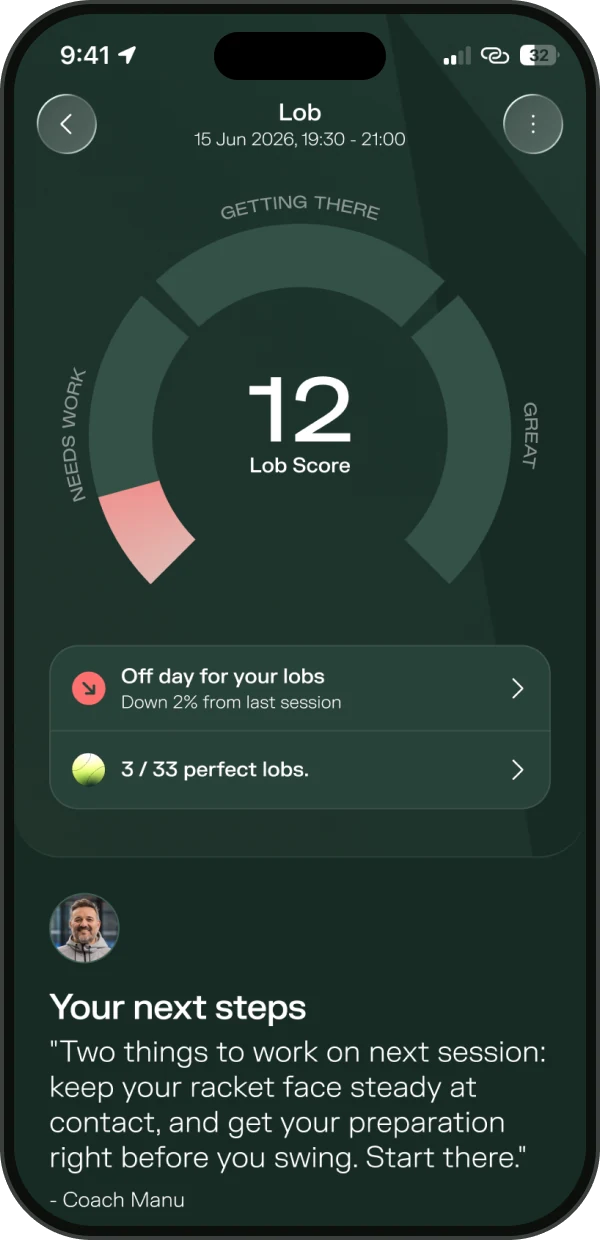
In training mode you choose the shot you are practising and hit at least five drives. The sensor measures every attempt on a set of criteria and compares it with reference swings from professional players. Each criterion is set so that a pro misses it only about one time in ten, so a pro scores around 90. Your drive score is the share of attempts that pass, averaged over all criteria.
What a good drive looks like to the sensor:
- More preparation than finish. A full backswing and a shorter follow-through.
- A steady build-up. The swing speeds up evenly, with no late surge just before contact.
- Less power than you think. The pros hit the drive with less power at contact: placement over pace.
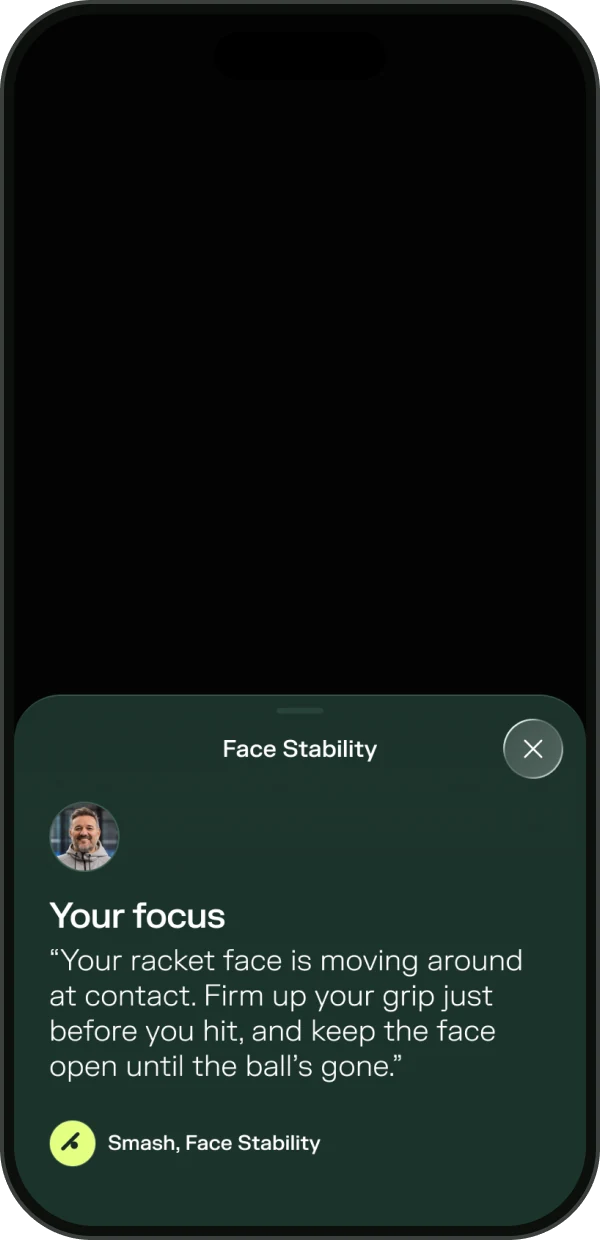
- A steady face. The racket face does not twist at contact.
- A smooth finish. No braking after contact.
After the session Coach Manu names the two criteria to work on next and the two that went well, explains how to fix each one, and shows your trend over your last ten training sessions.
Frequently asked questions
What is a drive in padel?
The groundstroke after the bounce, usually the forehand from the back of the court. In Spanish the backhand is the revés.
Which grip should I use?
The continental grip works for everything and is what most coaches teach. Some players use a slightly eastern grip on the forehand.
Should I hit with topspin like in tennis?
Sometimes, to dip the ball at the feet. But slice is the safer default because it stays low.
Next: playing off the walls, or back to the overview of all padel shot types. See how Padelplay tracks every shot.

